South Dakota Dog Registration Information
State Licensed, Service Dogs and Emotional Support Dogs in South Dakota
Registering a Dog in South Dakota for a Service Dog or Emotional Support Dog
If you’re asking where do I register my dog in South Dakota for my service dog or emotional support dog, the most important thing to know is this: South Dakota generally does not have a single statewide “service dog registry” or “ESA registry” that gives your dog legal status everywhere. What most people actually need is a dog license in South Dakota (when required), which is typically handled by your city or county animal control / licensing office.
In other words, when people search for where to register a dog in South Dakota, the correct answer is usually: license your dog locally (city or county), keep rabies vaccination current, and understand the separate legal rules for service dogs vs. emotional support animals.
A dog license (local government requirement) is different from a dog’s service dog legal status under federal disability law. Under federal ADA guidance, businesses and state/local governments generally cannot require “registration” or “certification” paperwork as a condition for admitting a service dog, but they can require that all dogs (including service dogs) comply with local licensing and vaccination rules.
Emotional support animals (ESAs) are also different: an ESA may have certain housing-related protections, but an ESA is not a service animal for public-access purposes under the ADA.
Where to Register or License Your Dog in South Dakota
Because licensing and rabies enforcement are often handled at the city or county level, start with your local animal control or licensing office. Below are examples of official South Dakota local-government (or local animal-control) offices that publish licensing or animal control contact details. If you live outside these cities, contact your city hall, police department animal control unit, or county offices for the correct animal control dog license South Dakota point of contact.
Example Office: Sioux Falls (Minnehaha County area)
City of Sioux Falls Animal Control (Law Enforcement Center)
- Address: 320 W. 4th St.
- City/State/ZIP: Sioux Falls, SD 57104
- Phone: 605-367-7000
- Hours: 7 days a week (except holidays), 6:00 AM–10:30 PM
How licensing works here (example)
Sioux Falls states that dogs and cats over 6 months must be licensed and vaccinated for rabies, and that proof of rabies vaccination is required to purchase a city license. Licenses may be purchased through participating local veterinarians and at city locations.
Example Office: Brookings (Brookings County area)
Brookings Police Department – Community Service Unit (Animal Control / Pet Licensing)
- Address: 307 Third Avenue
- City/State/ZIP: Brookings, SD 57006
- Phone: 605-692-2113
- Hours: Mon–Fri 7:00 AM–7:30 PM; Sat 10:00 AM–6:00 PM; Sun 11:00 AM–6:00 PM
- Email: Not published on the referenced page
Also commonly involved (city administration)
Many cities route licenses through animal control, the police department, the city clerk, or a partner veterinarian. If you’re unsure, call animal control first and ask, “Where do I buy a city dog license and what documents do you require?”
Brookings also publishes City Clerk contact details for other licensing matters; for dog licensing, the Community Service Unit page specifically references pet licensing through the unit and local veterinarians.
Example Office: Pierre (Hughes County area)
Pierre Police Department – Animal Control
- Address: 3200 E. Highway 34, Suite 13
- City/State/ZIP: Pierre, SD 57501
- Phone (Routine): 605-773-7413
- Phone (Dispatch): 605-773-7410
- Hours (Routine lines): Mon–Fri 8:00 AM–5:00 PM
- Email: Not published on the referenced page
What to ask (quick script)
- “Do I need a city dog license, and at what age?”
- “Do you require proof of rabies vaccination or a rabies tag number?”
- “Can I buy the license at a vet clinic, by mail, or in person?”
- “Do service dogs have the same licensing requirement as other dogs?”
Example Office: Rapid City / Pennington County area
Humane Society of the Black Hills – Animal Control Services (Rapid City area)
- Address: 1820 E. St. Patrick Street
- City/State/ZIP: Rapid City, SD 57703
- Phone: 605-394-4132
- Email: animalcontrol@hsbh.org
- Hours: Mon–Fri 8:00 AM–5:00 PM
Licensing note (example)
Rapid City area licensing details can vary by ordinance and service area. This office publishes animal control contact information and guidance about reporting issues; call to confirm whether you should purchase a city license, a county license, or another local permit.
Example Office: Aberdeen (Brown County area)
City of Aberdeen – Animal Control
- Address: Not published on the referenced Animal Control directory page
- City/State/ZIP: Aberdeen, SD 57401 (city listing)
- Phone: 605-626-7911
- Email: Not listed as a direct email address on the referenced directory page
- Hours: Not published on the referenced Animal Control directory page
Tip: If an office does not publish a street address on its directory page, call the phone number and request the correct walk-in location and hours for licensing.
Backup contact (police department administration)
- Aberdeen Police Department (Main): 605-626-7000
- Non-emergency dispatch: 605-626-7911
- Address: 114 2nd Ave. SE, Aberdeen, SD 57401-4201
- Hours: Mon–Fri 8:00 AM–5:00 PM (admin); dispatch 24-hour
Overview of Dog Licensing in South Dakota
South Dakota is primarily local for licensing
South Dakota dog licensing is often a local government function. Many residents encounter dog licensing rules through their city ordinance (for example, a city may require a license for dogs over a certain age and require proof of rabies vaccination). Where there is no municipal ordinance, counties may have authority to regulate dogs and impose a county license or tax for dogs not covered by a municipal ordinance.
Licensing is about identification and public health
A local dog license is typically designed to help animal control return lost pets, confirm rabies vaccination status, and support animal control services. That is why many local offices treat rabies vaccination proof as a core document for a license application or renewal.
Rabies vaccination requirements (public health and enforcement)
Rabies control is treated as a serious public health issue. In South Dakota, state-level guidance also emphasizes rabies vaccination (for example, the state Animal Industry Board indicates that animals 3 months or older must have a current rabies vaccination for certain movement/entry situations). Separately, local licensing offices commonly require a current rabies certificate when you apply for or renew a license.
How Dog Licensing Works Locally in South Dakota
Step 1: Identify your licensing jurisdiction
Start by determining whether you live inside a city’s limits (and therefore follow a city ordinance) or in an unincorporated county area. This matters because it changes where to register a dog in South Dakota:
- Inside city limits: Licensing is commonly handled by city animal control, the police department, city clerk, or a designated partner (like local veterinarians).
- Outside city limits: The county may handle dog regulation and may impose a county license or tax depending on local rules.
Step 2: Gather documents (rabies proof is usually key)
Most local programs require proof your dog is current on rabies vaccination before issuing a license tag. Keep a copy of the rabies certificate from your veterinarian (paper or digital) and any spay/neuter documentation if your locality uses different fee tiers.
Step 3: Apply and keep the tag accessible
Once approved, you’ll usually receive a tag that should be attached to your dog’s collar. Even if your dog is a service dog or an emotional support animal, a local license tag is often still expected if your city/county licenses dogs generally.
Step 4: Renew on schedule
Renewal timelines vary by locality (annual is common; some places offer multi-year options). If you move within South Dakota—especially to a new city—re-check the rules. Local ordinances can differ significantly across the state, so the correct animal control dog license South Dakota contact depends on your address.
Service Dog Laws in South Dakota
Service dog definition (public access)
Under federal ADA guidance, a service animal is generally a dog trained to perform a task directly related to a person’s disability. The dog’s public access rights are based on training and function—not on a purchased “registration,” badge, or certificate.
No mandatory “service dog registration” for public entry
ADA guidance states that covered entities generally cannot require documentation that a dog is registered, licensed, or certified “as a service animal” as a condition for entry. If it’s not obvious the dog is a service animal, staff are generally limited to two questions: whether the dog is required because of a disability and what work or task the dog has been trained to perform.
Local licensing still applies to service dogs
Even though a city cannot require “service dog certification” for public access, local governments can require service dogs to comply with the same rules that apply to all dogs, such as rabies vaccination and a regular dog license in South Dakota (where a city/county requires it). Practically, that means: you may not need a “service dog registry,” but you may still need a normal license tag from your local animal control or licensing office.
Emotional Support Animal Rules in South Dakota
ESAs are not service animals for public access
An emotional support animal (ESA) provides comfort by its presence, but that is not the same as being trained to perform disability-related tasks. Under federal ADA guidance, ESAs are not service animals for public access in places like restaurants, retail stores, or most public-facing businesses.
What “registration” usually means for an ESA
Many people search for ESA “registration,” but a paid registry is typically not what a local government uses for licensing. If your city or county requires a license tag for dogs, your ESA is usually treated like any other dog for licensing and rabies compliance: you license the dog through the same local office you would use for any pet.
Housing vs. licensing
ESA rules often come up in housing contexts (such as a landlord’s pet policy), while dog licensing is a local government public health and identification issue. Even if an ESA is permitted in certain housing situations, you should still follow the city/county dog license rules and keep rabies vaccination current.
Frequently Asked Questions
For public access under the ADA, you generally do not need a special service-dog “registration” or “certification.” However, you may still need a standard local dog license in South Dakota if your city or county requires licensing for dogs generally, and you should keep rabies vaccination current.
Rabies control can involve state public health guidance and local enforcement. In day-to-day life, you’ll usually interact with city animal control, a police department animal control unit, or a county office responsible for dog regulation. If you’re searching “animal control dog license South Dakota,” the correct agency is typically the one serving your exact city/county address.
Requirements vary, but many local offices request:
- Proof of current rabies vaccination (rabies certificate from your veterinarian)
- Owner identification
- Proof of residency (sometimes)
- Payment for the licensing fee (fee tiers may depend on spay/neuter status)
Start with your city hall (if incorporated) or your local law enforcement non-emergency line and ask for the animal control / licensing contact. If you are outside city limits, call your county offices and ask which department handles dog licensing or dog-at-large enforcement. This is the most reliable way to find where to register a dog in South Dakota based on your address.
Generally, yes—if the city requires licensing for dogs as a general rule, service dogs can be subject to those same licensing and vaccination requirements. What a city generally cannot do under the ADA is require a separate, mandatory “service dog registry” as a condition for public access.
Key Takeaway: License Locally, Understand Service Dog vs. ESA Rules
To resolve the question, where do I register my dog in South Dakota for my service dog or emotional support dog, focus on the local licensing path first:
- Find your city or county animal control / licensing office.
- Confirm whether a local dog license in South Dakota is required where you live.
- Keep rabies vaccination current and retain proof.
- Remember: a license tag is not the same as “service dog certification,” and an ESA is not the same as a service dog for public access.
What You May Need
- rabies vaccination proof
- identification
- proof of residency
- licensing fee
Quick Local Checklist
- Call animal control (non-emergency) and ask who sells license tags.
- Ask whether licensing is city-based, county-based, or done through participating vets.
- Ask whether your dog must be licensed at a certain age and whether there’s a multi-year option.
- Ask how they verify rabies vaccination and what happens if your dog’s rabies expires.
Register A Dog In Other South Dakota Counties
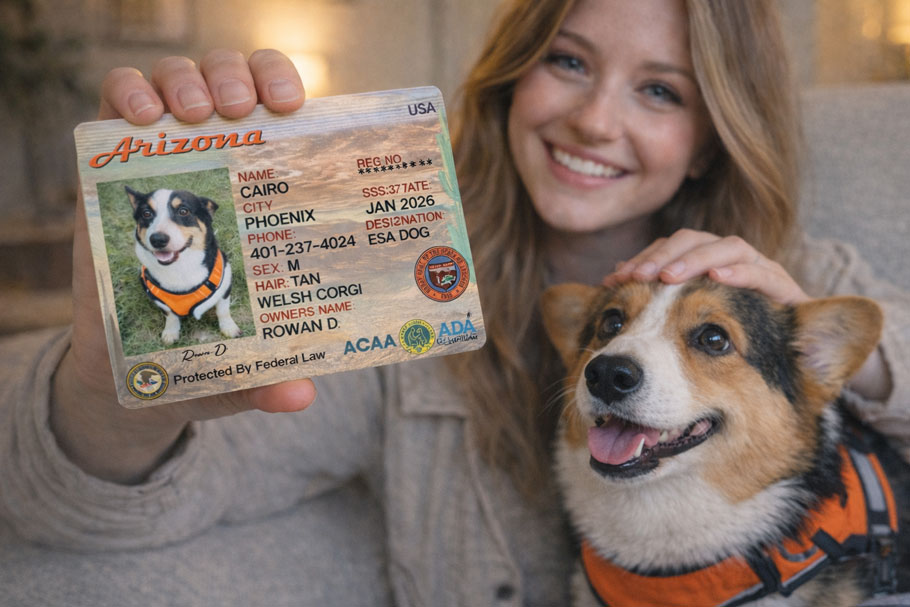
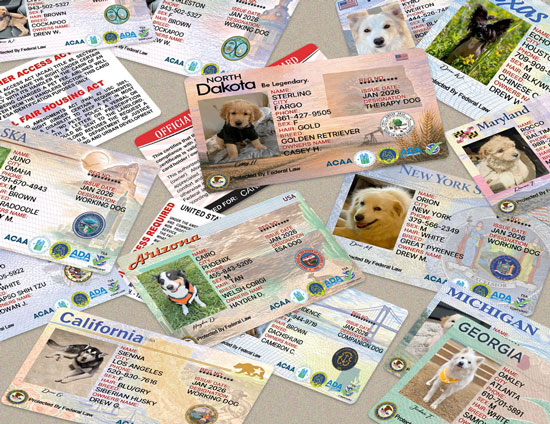
Select your county from the dropdown below to get started with your dog’s ID card. Requirements and license designs may vary by county, so choose your location to see the correct options and complete your pup’s registration.
- Aurora County Dog Registration
- Beadle County Dog Registration
- Bennett County Dog Registration
- Bon Homme County Dog Registration
- Brookings County Dog Registration
- Brown County Dog Registration
- Brule County Dog Registration
- Buffalo County Dog Registration
- Butte County Dog Registration
- Campbell County Dog Registration
- Charles Mix County Dog Registration
- Clark County Dog Registration
- Clay County Dog Registration
- Codington County Dog Registration
- Corson County Dog Registration
- Custer County Dog Registration
- Davison County Dog Registration
- Day County Dog Registration
- Deuel County Dog Registration
- Dewey County Dog Registration
- Douglas County Dog Registration
- Edmunds County Dog Registration
- Fall River County Dog Registration
- Faulk County Dog Registration
- Grant County Dog Registration
- Gregory County Dog Registration
- Haakon County Dog Registration
- Hamlin County Dog Registration
- Hand County Dog Registration
- Hanson County Dog Registration
- Harding County Dog Registration
- Hughes County Dog Registration
- Hutchinson County Dog Registration
- Hyde County Dog Registration
- Jackson County Dog Registration
- Jerauld County Dog Registration
- Jones County Dog Registration
- Kingsbury County Dog Registration
- Lake County Dog Registration
- Lawrence County Dog Registration
- Lincoln County Dog Registration
- Lyman County Dog Registration
- Marshall County Dog Registration
- McCook County Dog Registration
- McPherson County Dog Registration
- Meade County Dog Registration
- Mellette County Dog Registration
- Miner County Dog Registration
- Minnehaha County Dog Registration
- Moody County Dog Registration
- Oglala Lakota County Dog Registration
- Pennington County Dog Registration
- Perkins County Dog Registration
- Potter County Dog Registration
- Roberts County Dog Registration
- Sanborn County Dog Registration
- Spink County Dog Registration
- Stanley County Dog Registration
- Sully County Dog Registration
- Todd County Dog Registration
- Tripp County Dog Registration
- Turner County Dog Registration
- Union County Dog Registration
- Walworth County Dog Registration
- Yankton County Dog Registration
- Ziebach County Dog Registration